Overview
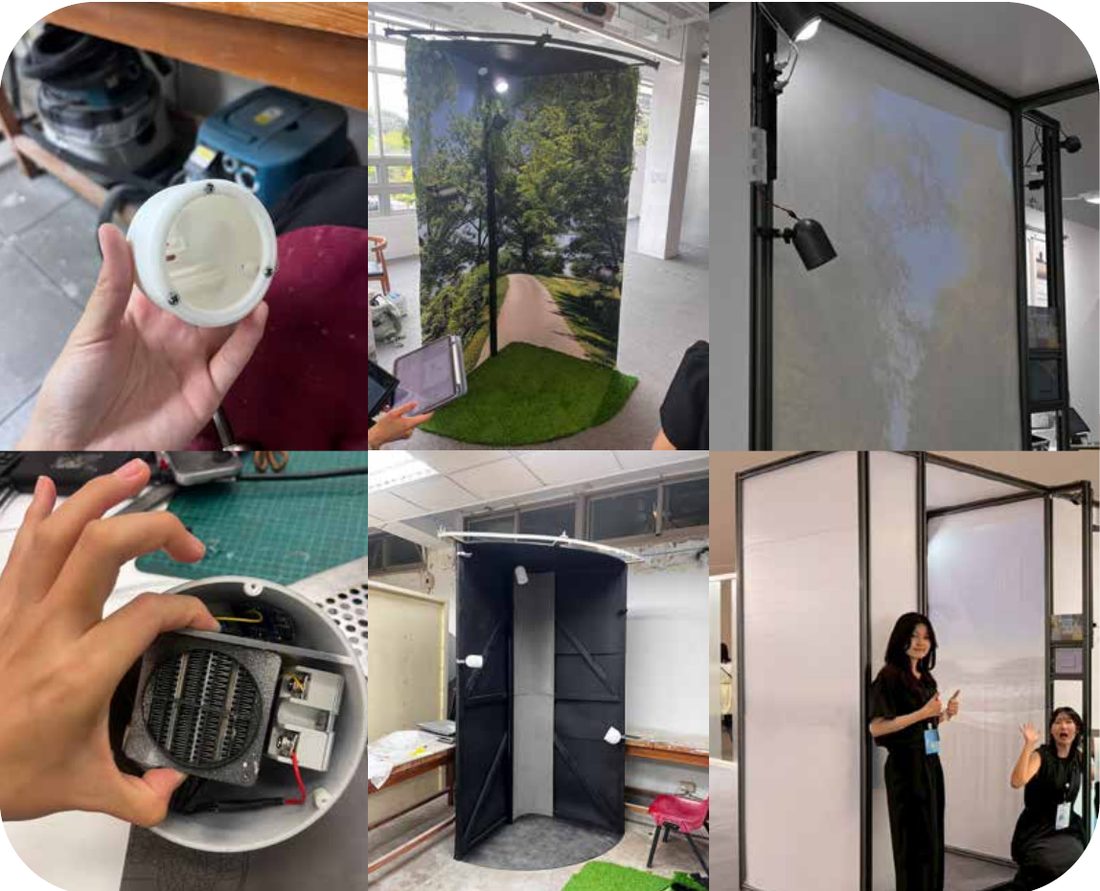
Trade shows increasingly want immersive experiences, but limited space, setup time, manpower, and budget make multisensory effects hard to pull off — and temporary booths throw away a lot of single-use material.
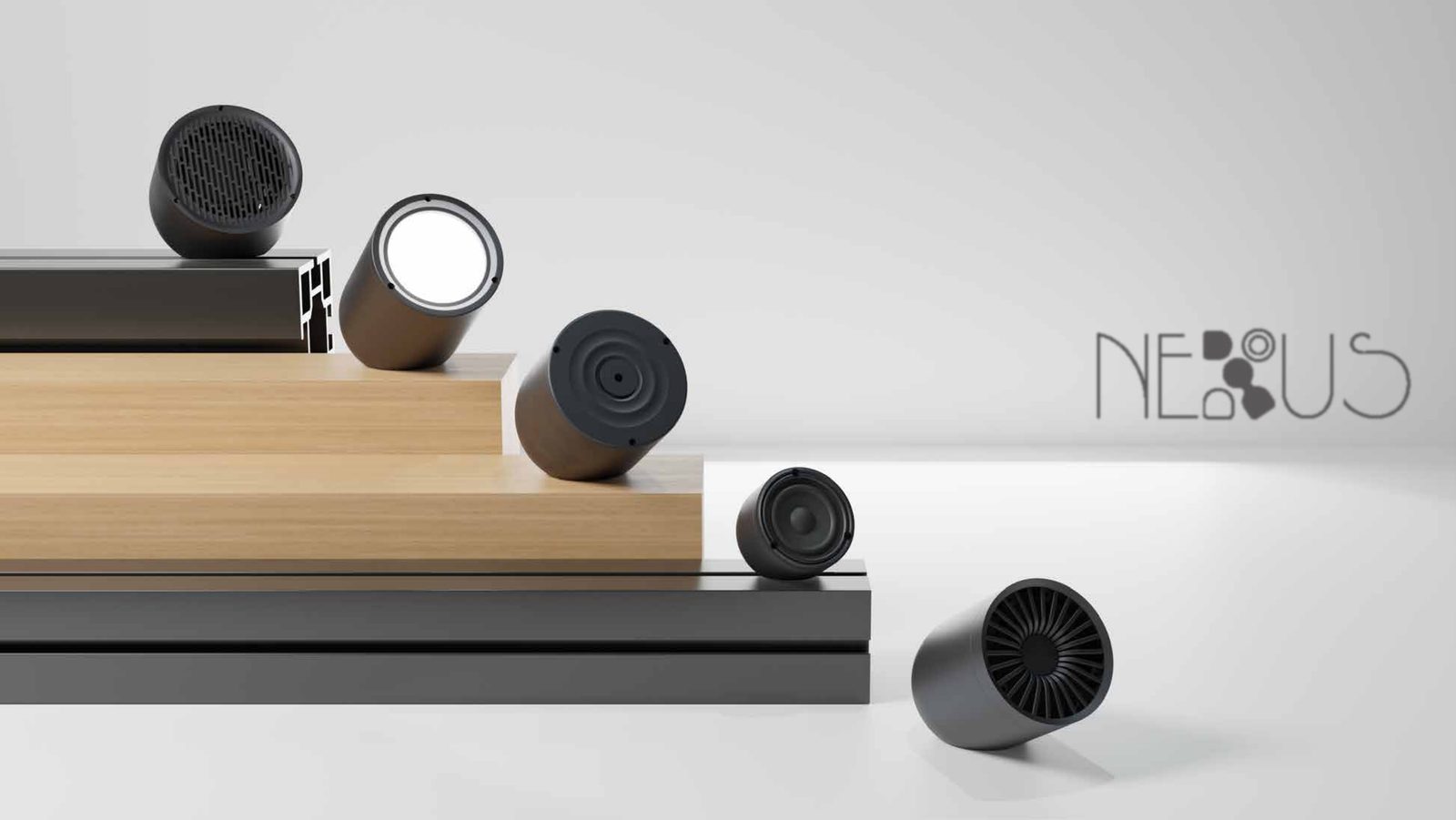
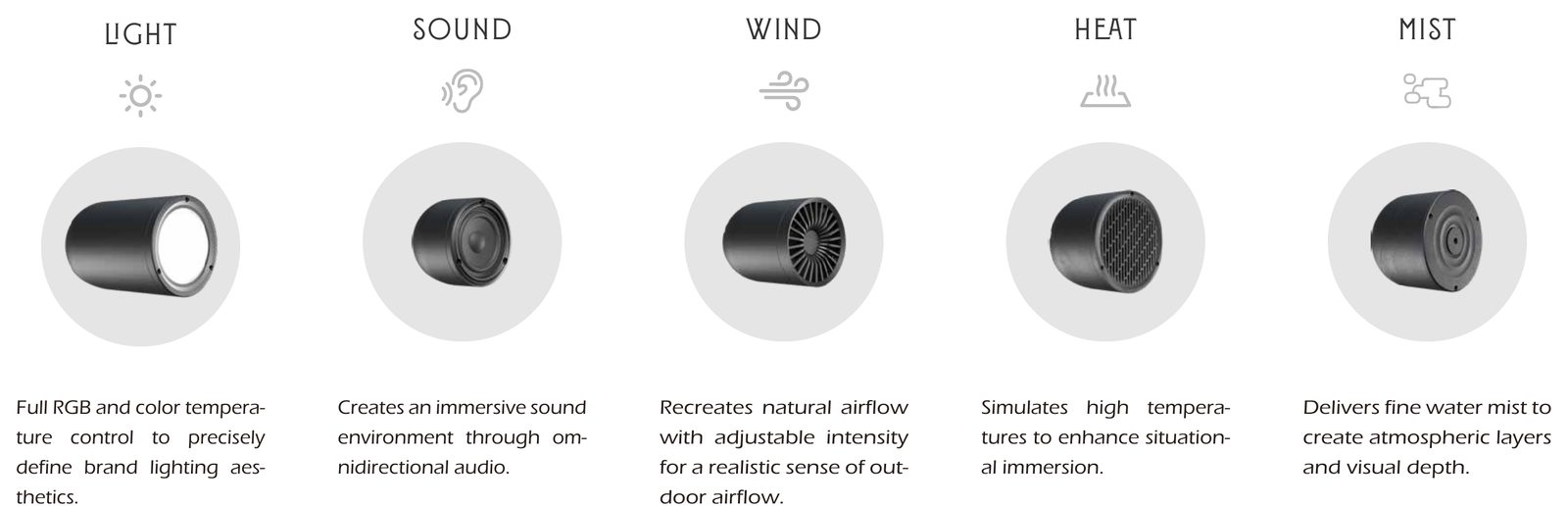
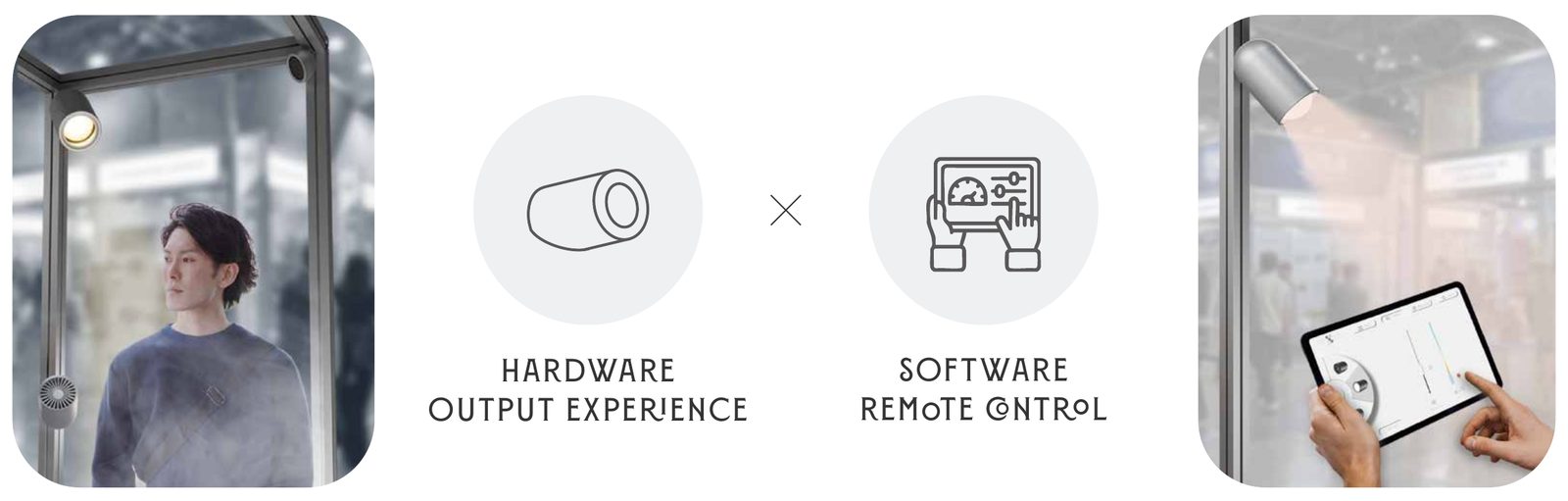
neXus answers this with sensory modules × connectors: self-contained modules for light, sound, wind, heat, and mist that clip onto exhibition structures in minutes and can be rearranged for every show. Our first use case is bringing the outdoors into an indoor booth, so visitors can feel the conditions an outdoor product is made for.
My role
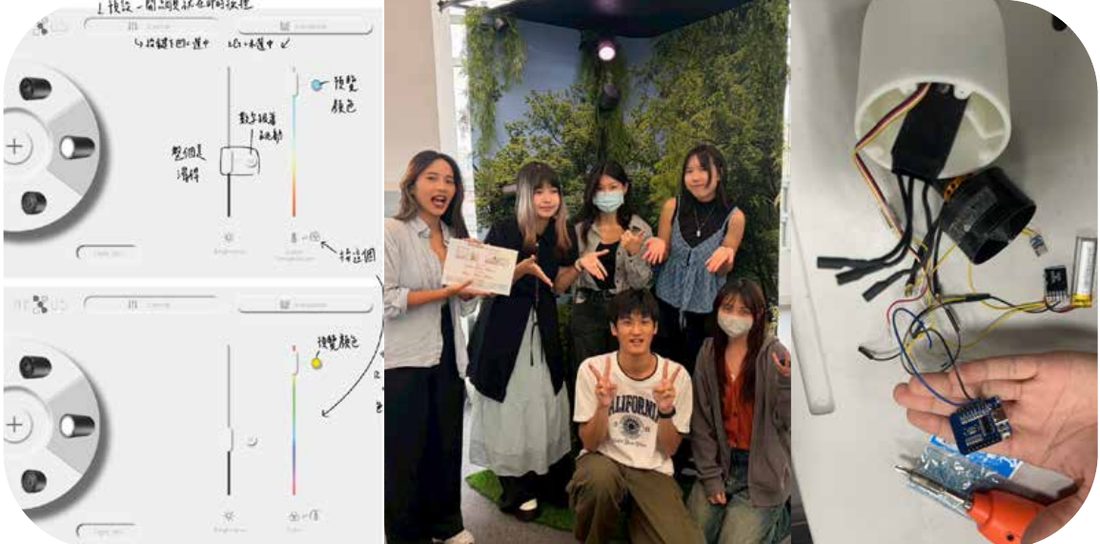
I joined the industrial design team as one of two engineers. I built the control server, the logic behind the iPad interface the team designed, and the communication between the iPad, the modules, and the projector, as well as the electronics of the heat module. My fellow engineer, Wei-Yu Yi, built the circuits for the wind and mist modules.
How the system works
One laptop runs everything: it hosts a Node.js server that talks to all the hardware, and drives the projector as a second screen. Exhibitors control the booth from an iPad web app over the local Wi-Fi.
| Module | Hardware | How it is controlled |
|---|---|---|
| Light | Wi-Fi smart bulb | UDP broadcast — on/off, brightness, color temperature (2200–6500 K), RGB |
| Heat | Heater + ESP8266 with a relay | HTTP on/off |
| Wind | Brushless fan + ESC + ESP8266 | HTTP speed control, plus a physical switch and a status LED |
| Sound | Laptop audio | Ambient tracks with volume control |
| Mist | Mist maker | Operated by hand on site |
| Projection | Projector on the laptop’s second screen | Server-Sent Events switch videos instantly |
One tap, one scenario
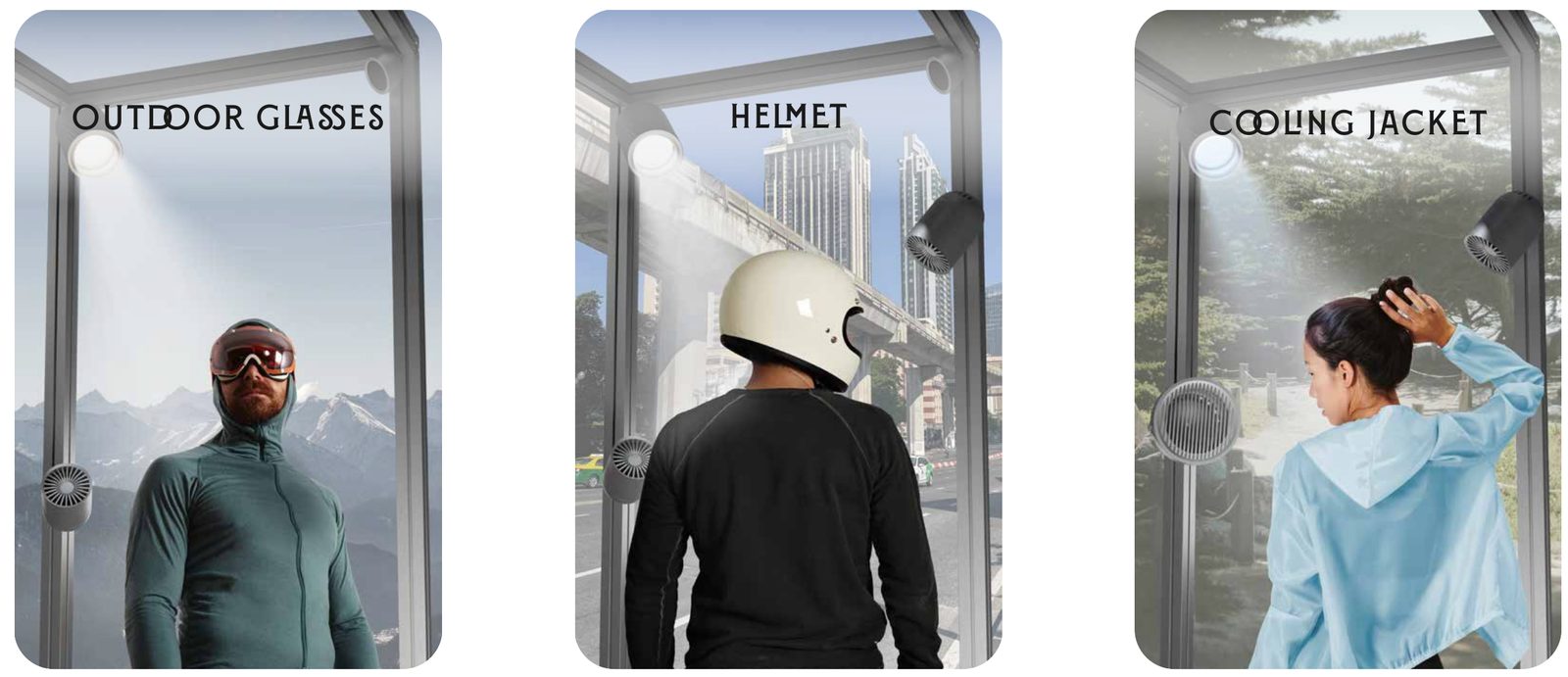
Each scenario sets wind, sound, light, heat, and the projected video together:
| Scenario | Wind | Sound | Light | Heat |
|---|---|---|---|---|
| Forest in the sun | 30% | Forest ambience | Bright daylight, 5200 K | On |
| Riding at night | 60% | Cycling ambience | Warm streetlights flashing past | Off |
| Bright coast | 40% | Coastal waves | Harsh midday sun, 6500 K | On |
Engineering details
- The interface is the single source of truth. Scenario presets don’t talk to the hardware directly — they move the sliders on the Control tab, and the sliders send the commands. Manual control and presets can never disagree.
- No race conditions on startup. While the page lines up its sliders on load, a guard flag blocks hardware commands so they don’t fight the welcome lighting.
- Lights that feel alive. A warm “breathing” light welcomes visitors with a 2-second sine wave; the night-ride scenario speeds it up between 20% and 100% brightness to feel like streetlights flashing by.
- Debounced commands. Dragging a slider sends at most one lighting command every 100 ms, so the bulbs are never flooded.
Development