Overview
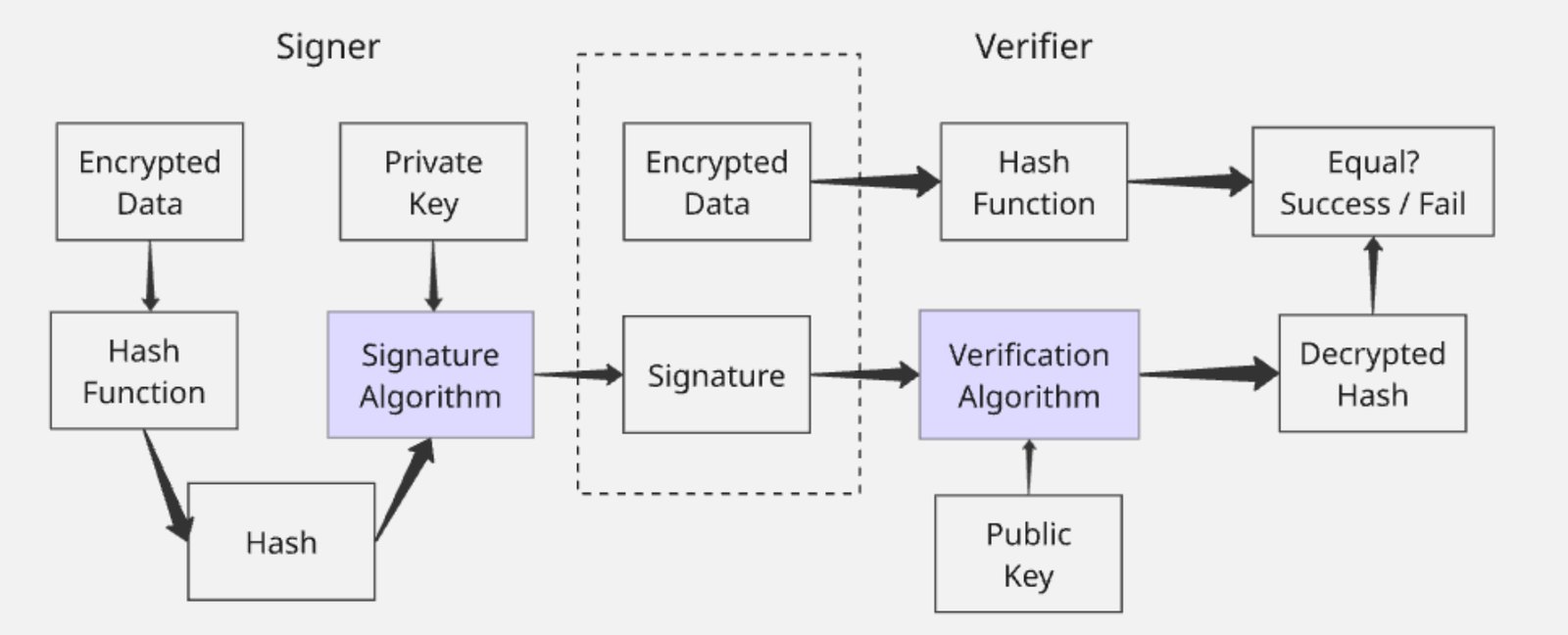
Today’s digital signatures (RSA, ECC) could be broken by a large quantum computer. In 2024 NIST standardized SLH-DSA (FIPS 205, based on SPHINCS+), a post-quantum signature scheme whose security rests only on hash functions. The catch is speed: it hashes constantly, and on a small CPU a single signature can take up to half an hour. That makes it hard to use on IoT and edge devices.
Our project reproduces the hardware–software co-design from the paper RVSLH: Acceleration of Post-quantum Standard SLH-DSA With Customized RISC-V Processor on the open-source CV32E40P RISC-V core, and takes it all the way to working FPGA hardware.
What we built
Hardware — a SIMD engine inside the CPU
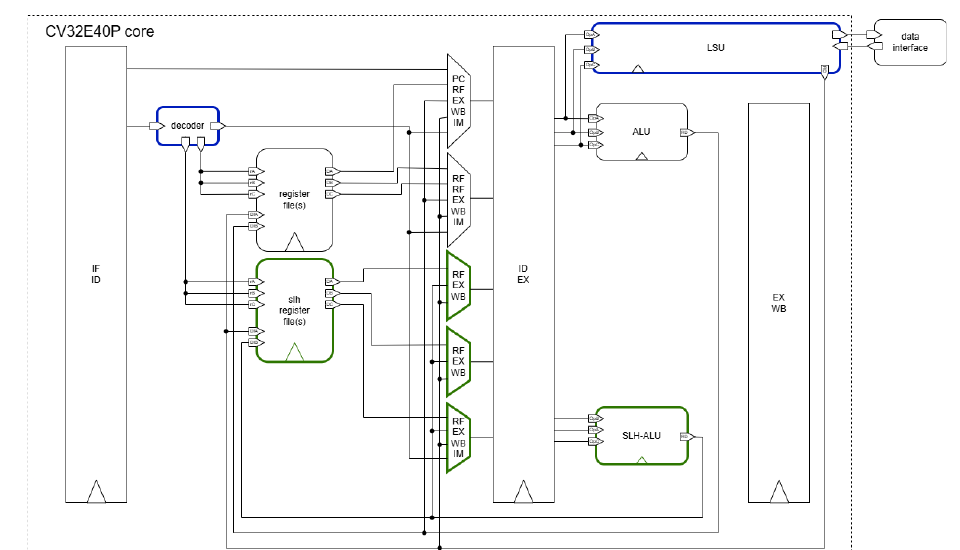
- 320-bit SIMD registers and ALU that hold five 64-bit Keccak lanes (one row of the state) at once, removing the data dependencies that make Keccak slow in software.
- Custom instructions that turn long chains of software logic into single operations:
| Instruction | What it does |
|---|---|
xor3v | XOR three SIMD registers |
xorrv | Rotate and XOR one SIMD register |
rxorv | XOR two SIMD registers, then rotate and reorder |
xornav | Compute (~A & B) ^ C on three SIMD registers |
lv / sv | Load / store a full 320-bit vector between memory and a SIMD register |
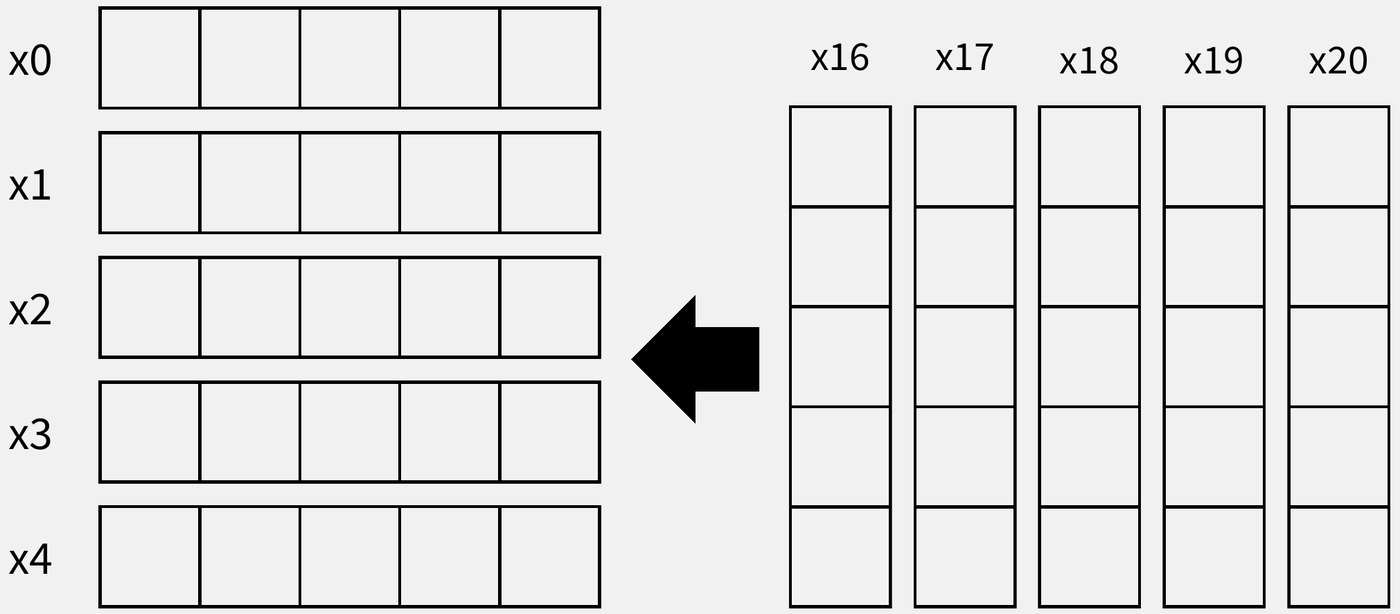
- Transpose and zero registers: extra register names map onto the same physical registers in transposed order, so the 5×5 Keccak state can be transposed without moving any data.
;; Compute C
xor3v   v5,  v0,  v1,  v2
xor3v   v5,  v3,  v4,  v5
;; Compute D
xorrv   v5,  v5
;; Compute B
rxorv   v6,  v0,  v5,  x0
rxorv   v7,  v1,  v5,  x1
rxorv   v8,  v2,  v5,  x2
rxorv   v9,  v3,  v5,  x3
rxorv   v10, v4,  v5,  x4
;; Compute E
xornav  v11, v7,  v8,  v6
xornav  v12, v8,  v9,  v7
xornav  v13, v9,  v10, v8
xornav  v14, v10, v6,  v9
xornav  v15, v6,  v7,  v10
;; xor x[0] with RC
...
Software — removing data copies
The NIST reference code builds every hash input with memcpy, stitching together the public seed, address, and data. We pre-allocated contiguous structures and updated addresses in place, removing those copies entirely. Because the Keccak state now lives in the SIMD registers, memory accesses drop as well.
My part: running it on real FPGA boards
I was responsible for system integration and hardware verification on the Xilinx PYNQ-Z2 board:
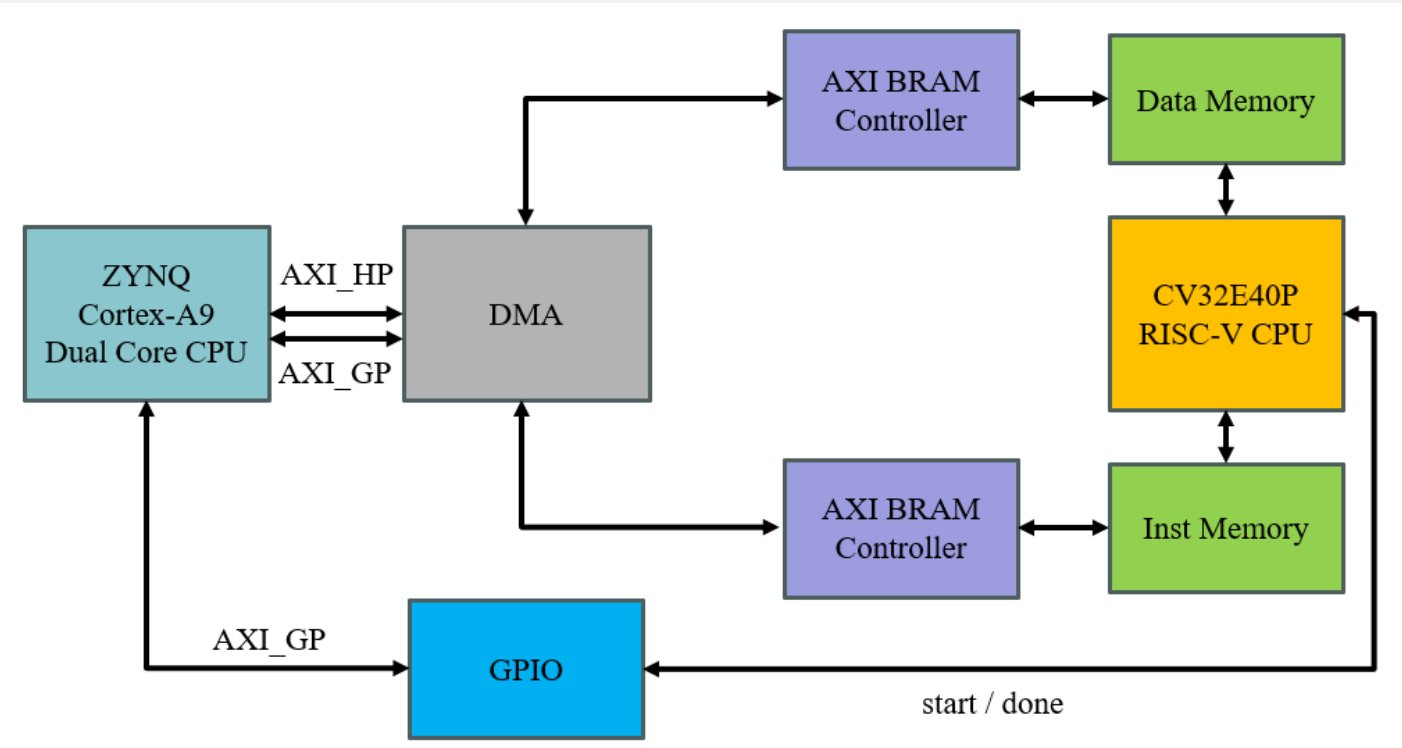
- A shared-memory SoC. The board’s ARM Cortex-A9 acts as the host and our RISC-V core as a co-processor. The ARM loads the program and data into the RISC-V’s instruction and data memories through DMA and AXI BRAM controllers, then starts it and waits for “done” through GPIO.
- Bare-metal software. With no operating system on the RISC-V side, I rewrote the startup code (
boot.S) and linker script (link.ld), cross-compiled the SLH-DSA C code to a raw binary, and mapped it into the FPGA’s separate instruction and data memories. - Automated verification with Python scripts on the ARM side.
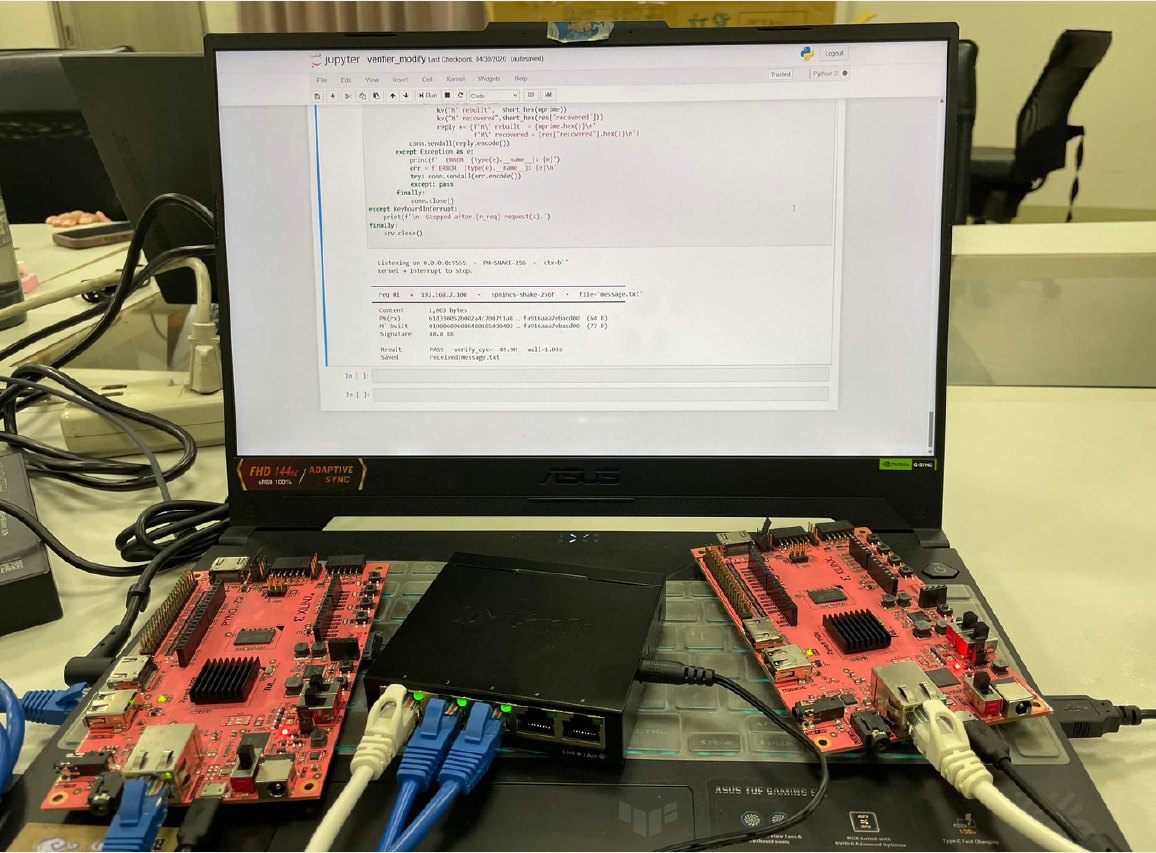
For the demo, one board signs a file and sends the signature over a socket to a second board, which verifies it — a complete post-quantum signing exchange between two devices.
Results
| Parameter set | Original CPU | With our SIMD core | Speedup (cycles) |
|---|---|---|---|
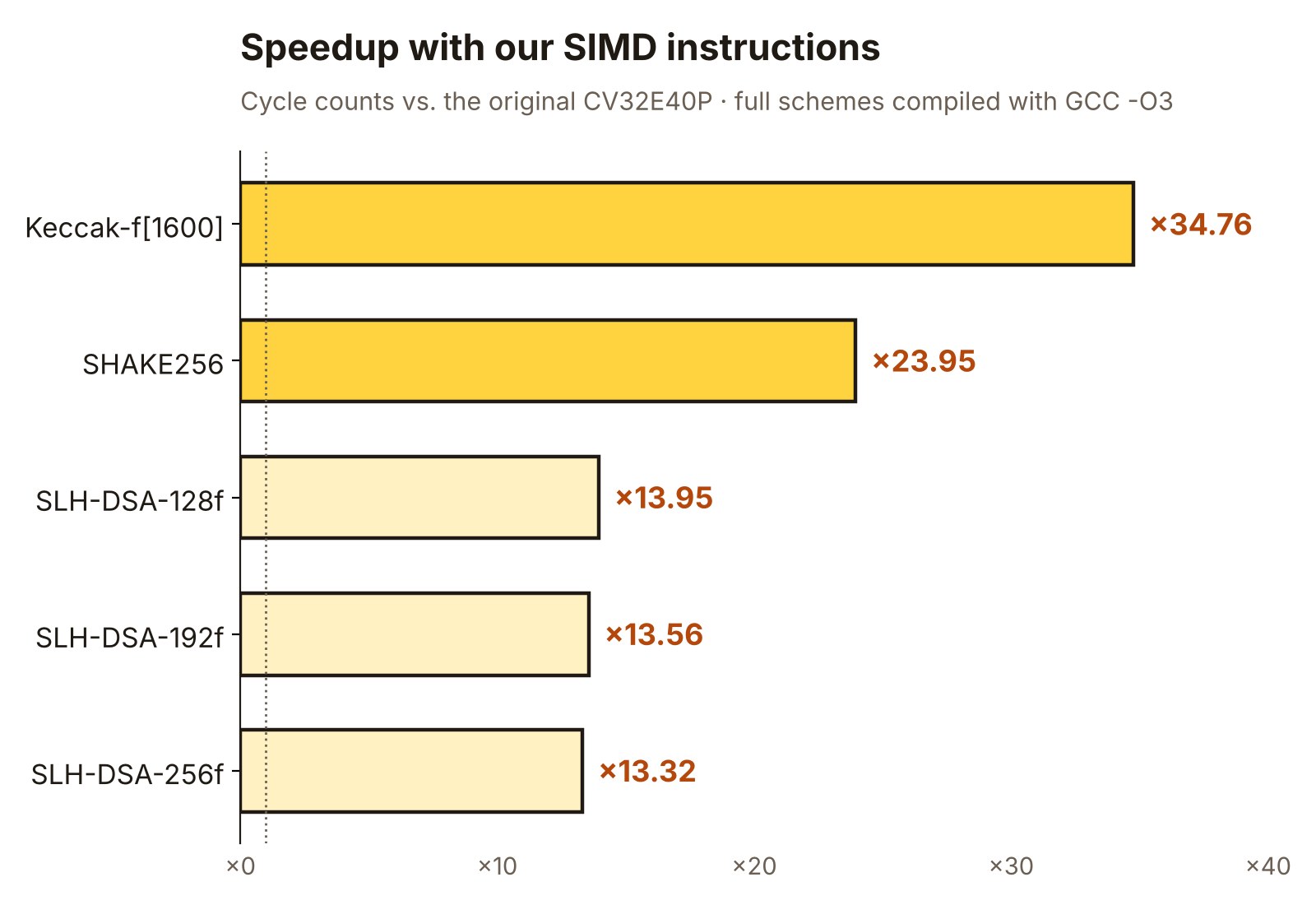
| SLH-DSA-SHAKE-128f | 2.67 M kcycles · 56.1 s | 0.19 M kcycles · 6.0 s | ×13.95 |
| SLH-DSA-SHAKE-192f | 4.30 M kcycles · 88.2 s | 0.32 M kcycles · 10.0 s | ×13.56 |
| SLH-DSA-SHAKE-256f | 8.70 M kcycles · 176.3 s | 0.65 M kcycles · 16.1 s | ×13.32 |
| Kernel | Original (cycles) | Ours (cycles) | Speedup |
|---|---|---|---|
| Keccak-f[1600] | 42,793 | 1,231 | ×34.76 |
| SHAKE256 | 220,357 | 9,200 | ×23.95 |
Full-scheme numbers were compiled with riscv64-unknown-elf-gcc 15.1.0 at -O3.
What’s next
- Turn the board into a post-quantum FIDO2 security key, adding the CTAP2 protocol and a USB interface for passwordless WebAuthn login.
- Reuse the SIMD engine for other Keccak-heavy standards such as ML-KEM.